Gearora Rush: placement-first puzzle auto-battler for Android
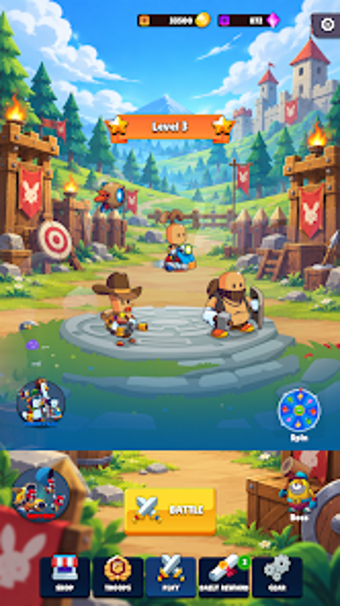
Arrange heroes, weapons, and gadgets on a gear grid to repel relentless waves while combat runs automatically, forcing decisions about position and synergy from the outset. Gearora Rush, from 上海北天库网络科技有限公司, is a mobile puzzle auto-battler that emphasizes placement over reflexes. It pairs a small install footprint (approximately 47.8 MB) with progression through resource gathering and gear upgrades, making it suitable for casual players who prefer planning and experimentation to fast-paced input.
Placement drives every encounter
So, every battle begins before combat starts: you set a gear grid populated with units and items, then watch the automated conflict play out. The core loop rewards adjusting a formation, because the developer designed outcomes so that a single repositioning can alter combo results. Success hinges on where units sit, not how you micromanage during a fight, which changes risk assessment compared with reflex-driven titles.
Does it offer different modes and mechanics?
The app focuses on a single mode of play: wave-based auto-battles against escalating enemy sets. Mechanics centre on grid placement, unit-item synergy, and resource-driven upgrades. Progression shows as earned resources that let you strengthen heroes and gear, and the wave structure creates clear checkpoints for testing new formations. The lack of separate real-time control modes keeps the experience deliberately preparation-focused.
What does the game look and sound like?
Thus, Gearora keeps its presentation lightweight to match a modest file size under 50 MB. Visuals and audio aim for clarity over spectacle, which suits Android devices running 7.0 and up. The interface foregrounds the gear grid and upgrade menus so players can iterate formations quickly; menus and icons present equipment and hero stats so placement decisions remain the main cognitive task.
Is progression, difficulty, and replayability satisfying?
So, difficulty scales through tougher waves rather than complex controls, and players unlock stronger gear and heroes to keep pace. Replayability comes from discovering new synergies and optimal formations, which encourages repeated experimentation. Because combat is automated, downtime becomes iteration time: try a change, run waves, then adjust. The structure matches casual sessions and iterative puzzle solving more than continuous action play.
Clear fit for planners, limited appeal for action seekers
Gearora suits players who enjoy methodical puzzle preparation and experimenting with positional combos; its small install size and Android 7.0 compatibility support play on lower-end devices. The design targets a niche audience building its user base, so players looking for fast-paced, reflex-based combat should consider that the app emphasises pre-battle decision-making rather than in-fight control.